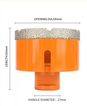



The list of plumber and electrician tools includes: electrometer, wire cutters, screwdrivers, electrician knives, electrician tool clips, wall hole chisels, impact drills, wire tensioners, wire strippers, pipe pliers, pedals, protective equipment, pullers, socket wrenches, pulleys, electric soldering irons, etc.
Plumbers are the general term for plumbers (plumbers) and electricians, referred to as plumbers. Plumbers are construction workers who install some simple circuits and waterways on the construction site. There are two types of plumbers, installation plumbers and maintenance plumbers. Installation plumbers are mainly responsible for the installation of electrical pre-buried water supply, drainage and fire protection bridges for civil engineering, and also for decoration, such as home decoration. Maintenance plumbers are plumbers hired by hotel and school properties.

Common tools for plumbers and electricians and how to use them
General tools
General tools refer to tools that electricians often use at work.
1. Electrometer
It is an instrument used to determine whether there is power on electrical equipment or lines. It is divided into low voltage and high voltage.
- How to use low voltage tester
a. You must hold the pen body as shown in the figure, and make the backlight of the neon tube window face yourself for easy observation.
b. To prevent the metal body of the pen tip from touching the human hand, an insulating sleeve must be put on the metal rod of the screwdriver test pen, leaving only the blade part for testing.
c. The test pen cannot be exposed to moisture, cannot be disassembled or severely vibrated at will.
d. It should be tested frequently on the charged body to check whether it is intact. Unreliable test pens are not allowed to be used.
c. If a single metal wire in the neon tube glows during the inspection, it is direct current; if both glow, it is alternating current.
- How to use high voltage tester
a. Two people should operate it when using it, one of them operates and the other monitors.
b. When outdoors, it must be used on sunny days.
c. The person performing the test operation must wear insulating gloves that meet the requirements and hold it correctly. As shown in the figure below.
d. Before use, it should be tested on a live body to check whether it is intact. Unreliable electrometers are not allowed to be used. High-voltage electrometers should be subjected to a withstand voltage test every six months to ensure safety.
2. Wire cutters
The functions of each part
a. Jaws: used to bend or clamp wire ends.
b. Teeth: used to tighten or loosen nuts.
c. Blade: used to cut wires or cut the insulation layer of soft wires.
d. Cutter: used to cut harder metal wires such as steel wire and lead wire.
e. The handle of the pliers must be covered with an insulating tube. The grip method when using is shown in Figure b above.
f. The shaft pin of the pliers head should be lubricated with engine oil frequently.
3. Screwdriver
Screwdrivers are commonly known as screwdrivers and screwdrivers, which are used to tighten or unscrew screws. Electricians cannot use screwdrivers with metal rods that pass through the top of the handle (commonly known as through-core screwdrivers). An insulating tube should be added to the metal rod.
4. Electrician's knife
Electrician's knife is a common electrician's tool used for cutting or dissecting.
- How to use an electrician's knife
(1) The blade should be facing outward when in use. After use, the blade should be folded into the handle immediately.
(2) The handle structure of the electrician's knife is not insulated. The electrician's knife cannot be used on live objects to avoid electric shock.
(3) The blade of the electrician's knife should be ground into an arc-shaped edge on one side. When dissecting the insulation layer of an insulated wire, the arc-shaped blade must be placed against the wire for cutting, so that the blade is not easy to damage the wire core.
5. Electrician's tool clip
The electrician's tool clip is a tool used by electricians to hold the most commonly used tools they carry with them. When in use, tie it around the waist with a belt.
Line installation tools
Line installation tools are tools used for line installation.
1. Wall hole chisel
There are four types of wall hole chisels: round tenon chisel, small flat chisel, large flat chisel and long chisel.
(1) Round tenon chisel: Figure a below, used to chisel wooden tenon holes in concrete structures.
(2) Small flat chisel: Figure b below, used to chisel wooden tenon holes in brick walls.
(3) Large flat chisel: Figure c below, used to chisel buried holes in angle steel brackets and supports.
(4) Long chisel: Figure d below is a round steel long chisel, used to chisel through holes in concrete walls. Figure e below is a steel pipe long chisel, used to chisel through holes in brick walls.
When using a wall hole chisel, the chisel body should be constantly rotated and frequently pulled away from the building surface to allow the dust, sand and stone chips in the hole to be discharged in time to avoid the chisel body being blocked in the building.
2. Impact drill
It is an electric tool that can be used as an "electric drill" or an "electric hammer". When using it, just adjust it to the corresponding gear.
Precautions for using the impact drill
(1) Speed and gear adjustment ("punch" and "hammer") should be performed when the drill is stopped. When drilling holes in the wall, a special impact drill bit should be selected according to the hole diameter. The impact drill bit is shown in Figure b below.
(2) During the drilling process, in order to remove soil debris in time, the drill bit should be pulled out frequently; when punching holes in reinforced buildings, excessive pressure should not be applied when encountering hard objects to avoid annealing of the drill bit.
3. Wire tensioner
The wire tensioner is used to tighten the wires of indoor and outdoor insulator lines and outdoor overhead lines, as shown in the figure below.
When using it, the positioning hook must be hooked on the wire bracket or crossarm, the wire clamp head clamps the end of the wire to be tightened, and then the handle is pulled to gradually tighten.
4. Wire strippers
Its function is to strip the insulation layer of plastic or rubber wires below 6 square millimeters. There are multiple incisions of different sizes on the pliers head to suit wires of different specifications, as shown in the figure below. When using, the wire must be cut and stripped on the incision slightly larger than the diameter of the wire core to avoid damaging the wire core.
- How to use wire strippers
Place the wire between the blade and the pliers head, then clamp the wire in the front blade, and refer to the centimeter scale to adjust the length of the peeling. (It can be adjusted at will). For thick insulation, turn the knob to control the blade force clockwise, and for thin insulation, turn it counterclockwise, adjust it to the best position, press the handle, and the insulation is cut without damaging the wire. At the same time, the blade slides to remove the insulation.
5. Pipe pliers
Pipe pliers are used to tighten or loosen the bundle or pipe nut on the wire pipe. The method of use is the same as that of the adjustable wrench.
- How to use pipe pliers
1. Adjust the appropriate spacing of the jaws to adapt to the diameter of the pipe to ensure that the jaws can clamp the pipe.
2. Generally, the left hand should be pressed on the head of the jaws with a little force, and the right hand should be pressed on the tail end of the pipe clamp handle as much as possible, using a longer force distance.
3. Press down with the right hand to tighten (loosen) the pipe fitting.
6. Pedal
The pedal is also called a pedal, which is used to climb the pole. The length of the rope should generally be one hand long. Both the pedal and the rope should be able to withstand a weight of more than 300kg, and a load test should be carried out every six months. The correct standing posture should be adopted to maintain stability.
Foot buckles can also be used to climb poles. The climbing speed is faster and the pole climbing method is simple, but it is not as flexible and comfortable as the pedal during operation, and it is easy to fatigue. It is suitable for short-term operation on the pole.
7. Protective equipment
When climbing the pole, you must wear a protective hat, protective gloves, electrician insulated rubber shoes and electrician work clothes.
Equipment decoration tools
Equipment decoration tools are tools for repairing or installing electrical equipment.
1. Puller
Pullers are commonly known as pullers. They are divided into two types: double-claw and three-claw. They are special tools for removing pulleys and bearings. The shape and use of the puller are shown in the figure below. When using, each claw should be kept at an equal distance from the center screw.
2. Socket wrench
It is used to tighten or loosen countersunk nuts, or in places where an adjustable wrench cannot be used. It consists of a sleeve and a handle. It consists of multiple sleeves with hexagonal holes or twelve-pointed holes and is equipped with a variety of accessories such as handles and connecting rods. The selection of the sleeve should be suitable for the size of the nut.
It is particularly suitable for turning bolts or nuts with very narrow positions or deep recesses. It is used when the nut end or bolt end is completely lower than the connected surface, and the diameter of the recessed hole cannot be used for an open-end wrench, an adjustable wrench, or a plum wrench. In addition, the bolt space is limited, so only a socket wrench can be used.
3. Pulley
Commonly known as a gourd, it is specially used for lifting heavier equipment. During the lifting process, if positioning is required at any time, or to prevent the equipment from rolling during lifting, a combined pulley should be used.
4. Electric soldering iron
The electric soldering iron is the heat source for soldering, and there are two types: internal heating and external heating.
Precautions when using:
(1) Select a suitable electric soldering iron according to the size of the welding area.
(2) Unplug the power plug at any time after using the electric soldering iron.
(3) When using the electric soldering iron on a conductive ground (such as concrete), the metal casing of the electric soldering iron must be properly grounded to prevent electric shock in case of leakage.