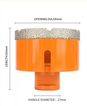



Hardware tools usually refer to metal products, including common tools such as pliers, wrenches, hammers, and screwdrivers. The word hardware comes from ancient times and originally refers to five metals including gold, silver, copper, iron and tin. Hardware tools now generally refer to various metal products and small tools, including hand tools, power tools, chip cutters, measuring tools, taps, saw blades, fasteners, welding tools and safety protection supplies, etc.
You can refer to the following points when choosing hardware tools:
1. Purchase according to needs: Choose the corresponding tools according to your actual needs. For example, for daily home maintenance, you can choose household tool sets, etc.; professional maintenance workers can choose professional tools according to their work needs.
2. Consider brand and quality: When purchasing hardware tools, you should choose well-known brands and quality-assured products to ensure the service life and safety of the tools.
3. Observe the material and production process of the tool: Good hardware tools are more particular about their materials and production process. You can observe whether the surface of the tool is flat, whether the structure is tight, whether the accessories are firm, etc., to evaluate its quality.
4. Check the specifications and models of the tools: When purchasing hardware tools, you should choose the appropriate specifications and models according to your own needs, such as the size of the wrench, the groove shape of the screwdriver, etc.
5. Trial and feel: When purchasing hardware tools, you can try it on your hand to see if the grip and feel are comfortable, such as the size and material of the handle.
When choosing hardware tools, you must comprehensively consider your own needs, the quality of the tools, the use effect and other aspects to ensure that you purchase cost-effective and practical hardware tools.