






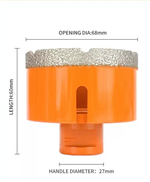

Bimetal Hole Opener
High industrial quality bimetal hole opener to help optimize and solve problems.
Item No:W59949
1.Structural and material characteristics
Bimetallic composite design:
Cutting part: The outer ring tooth edge is made of high-speed steel (hardness 63-67HRC), which is wear-resistant and high-temperature resistant, suitable for high-speed cutting;
Base part: The inner ring and shank are made of carbon steel (such as 45 #steel), with good toughness and impact resistance to avoid fracture of the cutter head.
Hollow annular structure: With a positioning drill in the center, only cutting the edge of the material when drilling to reduce resistance and debris. It is suitable for processing with large holes (12-120mm).
2.Applicable materials and processing scenarios
1)metal material processing
Conventional metal plates:
Drill vent holes and cable holes (such as power distribution cabinets and automobile sheet metal parts) in low-carbon steel, aluminum alloy, and copper alloy plates with a thickness of 2-8mm, for example, machining chassis cooling holes with a diameter of 50 mm.
Open side holes in thin metal pipes (such as stainless steel water pipes, aluminum alloy profiles) for pipe connection or bracket fixation (such as drilling of drying rack crossbars).
Medium hardness metals:
It can be efficiently drilled on galvanized sheet and cold-rolled steel sheet. Compared with single metal hole openers, bimetal structures are less likely to be annealed due to friction and overheating, making them suitable for batch processing (such as ventilation duct production).
2)Wood and plastic processing
Deep processing of wood:
Make large-aperture round holes (such as slightly speaker mounting holes, round mortise and mortise holes) in solid wood and multilayer boards, and make desktop threading holes with a diameter of 80mm or furniture decoration holes in carpentry scenes.
When processing MDF, MDF and other plates, the sharpness of the teeth can reduce edge cracking, which is suitable for making round handle holes on cabinet door panels.
Plastics and composites:
Drill large holes in PVC plates, acrylic, and ABS plates (such as light-transmitting holes in bathroom partitions and drainage holes in model boats) to meet ventilation and wiring needs, and are not easy to adhere to plastic debris.
3)Building and decoration materials
Lightweight panels and walls:
Drill air conditioning pipe holes (diameter 75mm) and wire sleeve holes in gypsum board and fiber cement board, and install range hoods and gas pipes during decoration;
Drill expansion bolt holes in the ceramic tiles (which need to be positioned with a glass drill bit) to fix the curtain pole or bathroom pendant (which requires low-speed operation).
3.typical application
1)industrial manufacturing
Mechanical and electrical equipment:
Machine heat dissipation holes (such as distribution cabinet fan installation holes), cable inlet holes (diameter of more than 60mm) on the metal chassis, or drill installation holes for fans and motor end caps.
In automobile manufacturing, sensor mounting holes and wire harness through-holes are drilled in the body steel plate to adapt to batch processing in automated production lines.
2)Construction and installation engineering
HVAC installation:
Drill water pipe holes (diameter 32-110mm) and ventilation pipe holes in floors and walls, such as kitchen smoke exhaust pipe through beam holes and toilet exhaust pipe holes.
During steel structure construction, bolt connection holes are drilled on angle steel and channel steel for bracket assembly or equipment fixation.
3)DIY Home Scenes
Furniture renovation:
Add round vents to old wardrobes, drill thread holes (50mm diameter) for desks, or drill extra-large drain holes (30mm diameter) for wooden flower pots.
Handmade:
Make round openings for wooden storage boxes, hollow patterns on metal decorative panels, or drill feeding ports in plastic buckets (such as renovating automatic pet feeders).
4)Repair and modification
Car/ship maintenance:
Drill modified holes in bumpers and fuel tank caps (such as installing reversing cameras and fuel filtering devices). The bimetal structure has good vibration resistance and reduces drilling deviation.
Equipment maintenance:
When replacing large motor bearings, drill locating holes in the end caps, or repair worn equipment mounting holes (insert bushings after reaming).
4.Performance advantages and usage points
Compare advantages:
Fracture resistance: Carbon steel matrix enhances toughness and is more resistant to impact than all-alloy holes. It is suitable for manual drilling or uneven material scenarios;
Cost performance: The cost of high-speed steel gear rings is lower than that of cemented carbide and is suitable for medium-strength processing (such as unhardened steel and ordinary wood).
Operation suggestions:
Speed control: 800-1500 RPM for metal processing, 1500-2500 RPM for wood/plastic to avoid tooth edge wear caused by high-speed idling;
Lubrication and cooling: Apply cutting fluid (such as engine oil) when processing metal to reduce frictional heat; wood processing requires timely cleaning of debris to prevent drill sticking;
Positioning skills: Use a central drill or a small drill bit to drill and position first to ensure that the hole opener is vertical to avoid material damage caused by "running out of position".
Previous
Bimetal Hole Opener 25mmYou Might Also Like



Send Inquiry